
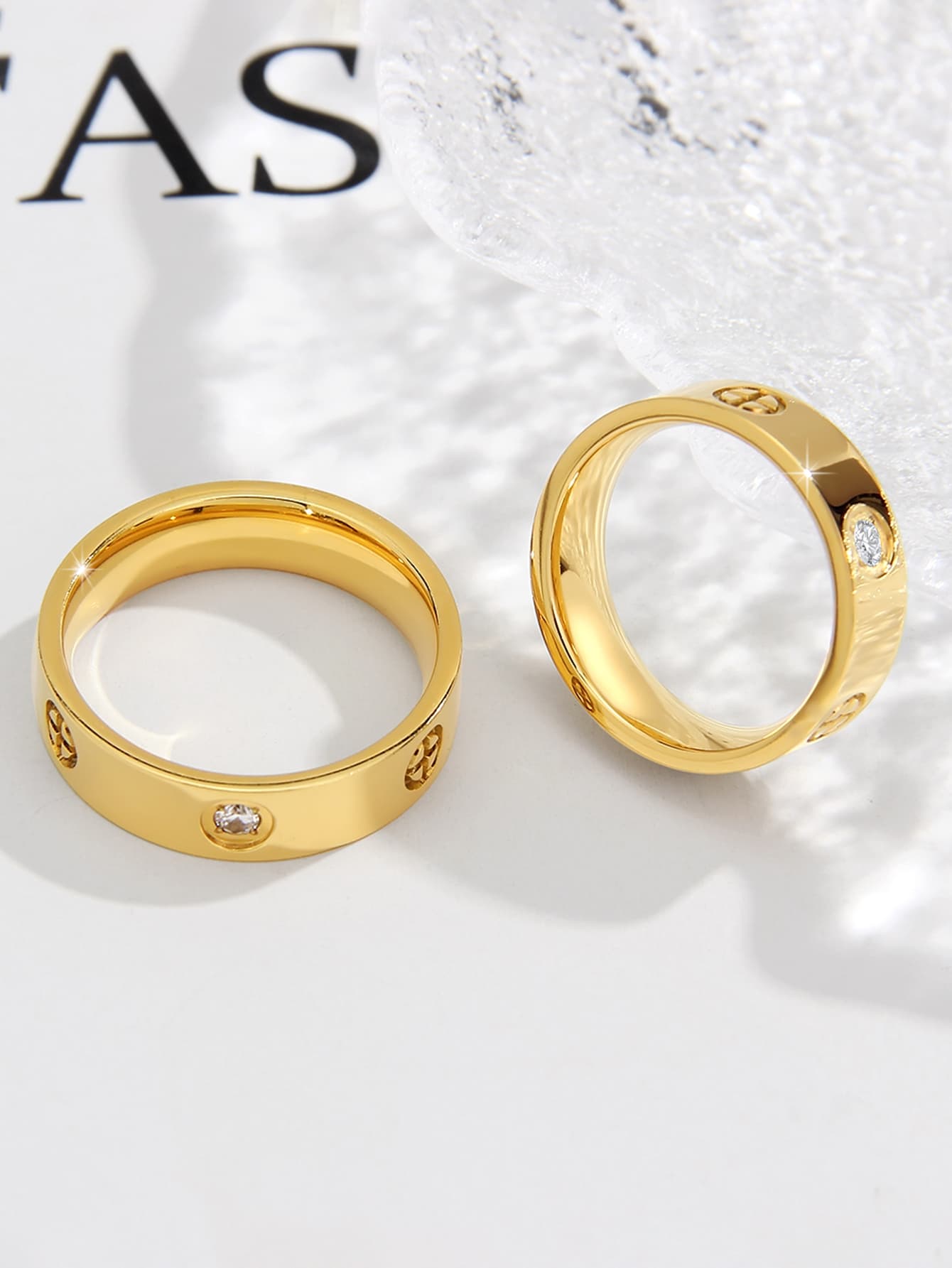
Introduction
Gold and black are two of the strongest visual directions for stainless steel rings, but they do not behave like simple paint colors. The final result depends on the base steel, surface preparation, coating system, geometry, wear points, cleaning process and production control. A buyer choosing between gold stainless steel rings and black stainless steel rings therefore needs more than a color card.
The short answer is this: choose the finish that matches the customer, merchandising plan and acceptable wear profile, then approve it through physical samples and defined tests. Gold usually supports feminine, gift-led and layered collections. Black often fits men’s, unisex, signet and technical-looking designs. Neither finish is automatically more durable simply because a supplier uses the term “PVD.”
This guide explains what wholesale buyers should compare, how factory testing can be planned, what to inspect before shipment and how to write product claims that remain accurate after the ring reaches the customer.
What does PVD mean on a stainless steel ring?
Physical vapor deposition, or PVD, is a family of vacuum coating processes. Material is vaporized and deposited as a thin film on a prepared surface. Decorative PVD systems are used where a metallic color and improved surface performance are required. A coating specialist such as Ionbond describes decorative PVD on stainless steel as an option for improved wear resistance and a long-lasting metallic appearance.
That description is useful, but “PVD” is not a complete purchasing specification. Two suppliers can both offer PVD rings while using different pretreatment, layer structures, coating chemistry, thickness, temperatures and process controls. The shape of the ring also changes performance. A smooth band presents a relatively accessible surface; a spinner track, stone seat, engraving or sharp edge may be harder to clean and coat consistently.
For purchasing purposes, separate four questions:
- What is the base material?
- How is the surface prepared?
- What coating and color standard are being used?
- What evidence supports the expected performance?
If a quotation only says “18K PVD,” ask what that phrase means in that factory. It normally describes the intended gold color or coating composition, not a promise that the entire ring is solid 18-karat gold.
Gold stainless steel rings: commercial strengths and risks
Gold-tone stainless steel rings work well in collections built around warmth, gifting, layering and everyday fashion. A gold finish can coordinate with pearl, white enamel, clear cubic zirconia, floral motifs and softer packaging palettes. It is especially useful when a retailer wants the visual language of gold jewelry at a more accessible price point.
The main purchasing risk is not whether the first sample looks attractive. It is whether color and surface appearance remain consistent across sizes, batches and reorders. A warm yellow, pale champagne and saturated orange-gold can all be called “gold” in casual conversation. They do not merchandise as the same color.
A practical approval process uses a physical master sample rather than a phone image. Review the sample under neutral light and compare it with other items that will be sold in the same collection. Record the approved sample, finish code and date. If the ring combines polished and brushed areas, approve both because texture changes perceived color.
Gold-coated rings also show wear differently from bare steel. High-contact points such as the lower palm side, edges and raised motifs receive more abrasion. If the base steel becomes visible, the contrast may be noticeable. This is why lifetime “never fades” promises are not responsible. The U.S. Federal Trade Commission advises that jewelry descriptions should represent metallic content and durability truthfully; its consumer guidance also notes that gold plating eventually wears depending on use and thickness.
Black stainless steel rings: commercial strengths and risks
Black stainless steel rings create a sharper, more architectural look. They fit signet rings, wide bands, chain details, geometric spinner rings and men’s or unisex assortments. Black can also make polished edges, stones and gold accents more visible through contrast.
The challenge is that black surfaces make some defects easier to see. Dust, oil, fingerprints and fine scratches can interrupt an otherwise uniform appearance. Edge wear may expose a bright line against the dark surface. For this reason, packaging and handling matter as much as the coating itself.
During sample review, examine flat surfaces, inner edges, engraving, spinner tracks and points where components touch. Operate a spinner repeatedly and check whether metal-to-metal contact creates an early bright line. Confirm that stone setting or assembly tools do not mark the black surface. Ask the factory to show samples before and after assembly, because a coating can leave the chamber correctly and still be damaged later.
Black is often described as “gunmetal,” “black,” “graphite” or “dark gray.” These names are subjective. Approve a physical reference and state whether the desired finish is glossy, satin or brushed. A gloss black may show fingerprints more readily, while a brushed black can reveal directional inconsistency if polishing is uneven.
Gold vs. black: a buyer’s comparison
| Decision factor | Gold stainless steel rings | Black stainless steel rings |
|---|---|---|
| Common positioning | Women’s fashion, gifting, stacking, bridal-inspired fashion | Men’s, unisex, signet, technical and statement styles |
| Visual pairing | Pearl, white enamel, clear stones, cream packaging | Clear stones, dark enamel, geometric forms, black packaging |
| Visible wear concern | Contrast between gold surface and exposed steel | Bright edge or scratch against a dark surface |
| Batch-control priority | Gold tone consistency | Shade, gloss and surface uniformity |
| Photography | Control warm reflections and white balance | Control dust, fingerprints and crushed shadow detail |
| Packaging priority | Prevent rubbing and chemical residue | Prevent scratching, lint and fingerprints |
This table is a merchandising starting point, not a rule. A black floral ring can be commercially distinctive, and a gold signet ring can work well for men. The best decision comes from the intended customer, price point and channel.
Does PVD make a ring scratch-proof or tarnish-free?
No coating should be presented as scratch-proof. PVD can improve wear performance compared with some conventional decorative coatings, but the finished ring remains a physical object exposed to abrasion, chemicals and impact. Performance varies with the complete coating system and use conditions.
“Tarnish-free” also needs careful language. Stainless steel resists corrosion through its passive surface behavior, while a decorative color layer changes the appearance and contact surface. Residue, fine scratches, chemical exposure and coating wear can all change how a ring looks even when the base steel has not corroded.
For consumer-facing copy, describe evidence rather than absolutes. Examples include:
- “316L stainless steel base with a gold-tone PVD finish.”
- “Designed for everyday jewelry wear; avoid chlorine and abrasive cleaners.”
- “Finish longevity depends on wear, care and chemical exposure.”
- “Batch-tested against the brand’s approved color and appearance standard.”
Avoid “permanent,” “indestructible,” “100% waterproof forever” or “guaranteed never to fade” unless the business can substantiate the exact interpretation customers are likely to take from that statement.
What should be specified before sampling?
A finish brief should include more than a reference photograph. Give the supplier a controlled decision set:
Base and construction
- Required base material and whether every metal component must use it
- Ring sizes, band width, wall thickness and approximate weight
- Spinner, chain, stone, enamel or engraved details
- Areas that should remain uncoated or receive a contrasting finish
Color and texture
- Gold, champagne, rose, graphite or black direction
- Gloss, satin, brushed or mixed texture
- Physical reference sample where color matching is critical
- Acceptable variation between parts and reorder batches
Performance and claims
- Target market and applicable requirements
- Intended wear and care statement
- Tests requested, method, duration, sample quantity and pass criteria
- Product wording that the evidence is expected to support
Packaging
- Individual protective bag, film, pouch, card or box
- Separation between rings and hard accessories
- Handling instructions for dark polished finishes
- Desiccant or anti-tarnish material only where compatible and justified
This specification becomes the foundation for sample approval and shipment inspection. Without it, “good quality” is difficult to measure consistently.
A practical factory testing plan
Testing should be selected for the product, market and claim. It should not be a collection of impressive test names without defined methods. A useful plan combines visual, mechanical and exposure checks.
First, confirm appearance. Compare color, gloss, surface defects and coverage with the approved sample under consistent lighting. Inspect difficult areas such as inner edges, holes, grooves and stone seats.
Second, examine adhesion and wear using a method agreed with the supplier or laboratory. The correct method and acceptance limit depend on the coating system. A short internal rubbing check can help process control, but it should not be presented as equivalent to a standardized laboratory test.
Third, consider exposure testing for the target claim and market. Artificial perspiration, corrosion or chemical-contact tests may be relevant, but their conditions must be documented. A ring that passes one controlled exposure is not proven immune to every pool, cleaner, perfume or climate.
Fourth, test the assembled product. Spinner components should move without scraping the visible coating. Stones, enamel and adhesive areas should be reviewed after relevant handling. Production packing should be tested through a simulated shipment or controlled vibration/drop plan when packaging damage is a known risk.
Finally, retain records. The report should identify the sample, batch, date, method, result and acceptance decision. This supports repeat orders and responsible marketing far better than a generic supplier statement.
Shipment inspection: what changes by finish?
At pre-shipment inspection, randomly selected rings should be checked against the approved sample and purchase specification. For gold styles, focus on tone consistency, incomplete coverage and marks at raised edges. For black styles, focus on scratches, fingerprints, dust, gloss variation and bright contact lines.
Both finishes need checks for:
- Correct SKU, size and quantity
- Ring-size accuracy on a calibrated mandrel
- Smooth interior and edges
- Spinner movement, sound and interference
- Stone, enamel and decorative-component security
- Logo position and engraving legibility
- Cleanliness and individual protection
- Barcode, care card and carton accuracy
Do not rely on a single “hero” sample from the top of a carton. Inspection should draw units across cartons and size/color variants. If the order contains several finishing batches, the sampling plan should make sure each batch is represented.
How should gold and black rings be photographed and merchandised?
Accurate photography is part of trustworthy product communication. Gold is sensitive to white balance; excessive warmth can make a pale finish appear orange. Black can lose detail when shadows are too deep. Use a neutral reference during shooting and keep color editing consistent across the collection.
Show at least one full product image, one wearing image and one detail view. For spinner rings, add a short video demonstrating the movement. Avoid using a render as the only product representation after production has begun. A render communicates design intent; a photograph communicates actual finish and assembly.
For wholesale catalogs, list base material, color finish, available sizes, mechanism and care notes. If a buyer can compare these details without sending five clarification emails, the content is doing useful sales work.
Frequently Asked Questions
Is black PVD more durable than gold PVD?
Color alone does not determine durability. The layer system, preparation, geometry, process control and use conditions matter. Compare samples and defined test results rather than assuming black or gold is inherently stronger.
How long does gold PVD last on a stainless steel ring?
There is no responsible universal number. Wear depends on coating specification, ring shape, contact points, frequency of use, chemicals and care. Ask for evidence tied to a defined test and use realistic care language.
Can a PVD ring be described as 18K gold?
The description should make the construction clear. “18K gold-tone PVD finish on 316L stainless steel” is more transparent than wording that could imply a solid-gold ring. Market-specific legal advice may be needed.
Why do two gold samples look different?
Possible causes include different color targets, coating batches, surface textures, polishing, lighting and camera white balance. Use one approved physical standard and controlled review conditions.
Should a buyer order both gold and black in the first collection?
Only if both serve a defined customer or merchandising role. A focused first order with clear size and color allocation usually produces more useful sales data than adding variants without a hypothesis.
Conclusion
Gold and black stainless steel rings can both build distinctive, commercially useful collections. The buyer’s job is not to choose the “best” color in isolation. It is to connect finish, customer, design, evidence, claims and packaging into one controlled specification.
Approve physical samples, define color and texture, test the assembled ring, inspect multiple cartons and describe the product honestly. Those steps improve consistency and make reorders easier—two outcomes that matter more than an unsupported promise about permanent color.
Sources and editorial note
- FTC Jewelry Guides
- FTC consumer guidance on plated jewelry
- Ionbond decorative PVD coating for stainless steel
This article is educational and does not replace product-specific laboratory testing or legal advice for a destination market.