The responsible answer in one minute
A properly made 316L stainless steel ring generally tolerates routine contact with clean water better than many inexpensive base-metal alternatives. The steel forms a passive chromium-rich surface layer that helps resist corrosion. That does not mean every ring is permanently waterproof in every environment, or that every gold-colored coating will remain unchanged after unlimited exposure.
“Tarnish-free” is best treated as a performance goal, not an absolute lifetime promise. “Hypoallergenic” means lower likelihood of reaction for many people; it does not guarantee compatibility for every wearer. A finished ring may include solder, stones, enamel, adhesive or coating layers that behave differently from the 316L base.
What 316L means
316L is a low-carbon version of 316 stainless steel. Chromium supports passive-film formation, nickel contributes to structure and corrosion performance, and molybdenum improves resistance in challenging environments compared with many simpler stainless grades. The “L” refers to lower carbon content, which is useful in fabrication and welding contexts.
For jewelry procurement, a material name on an invoice is not the same as verification. Buyers can request supplier declarations and, when risk or volume justifies it, use independent compositional screening. Testing must be interpreted correctly: surface plating can affect readings, and a single sample does not automatically represent every production batch.
Water resistant is not chemically invincible
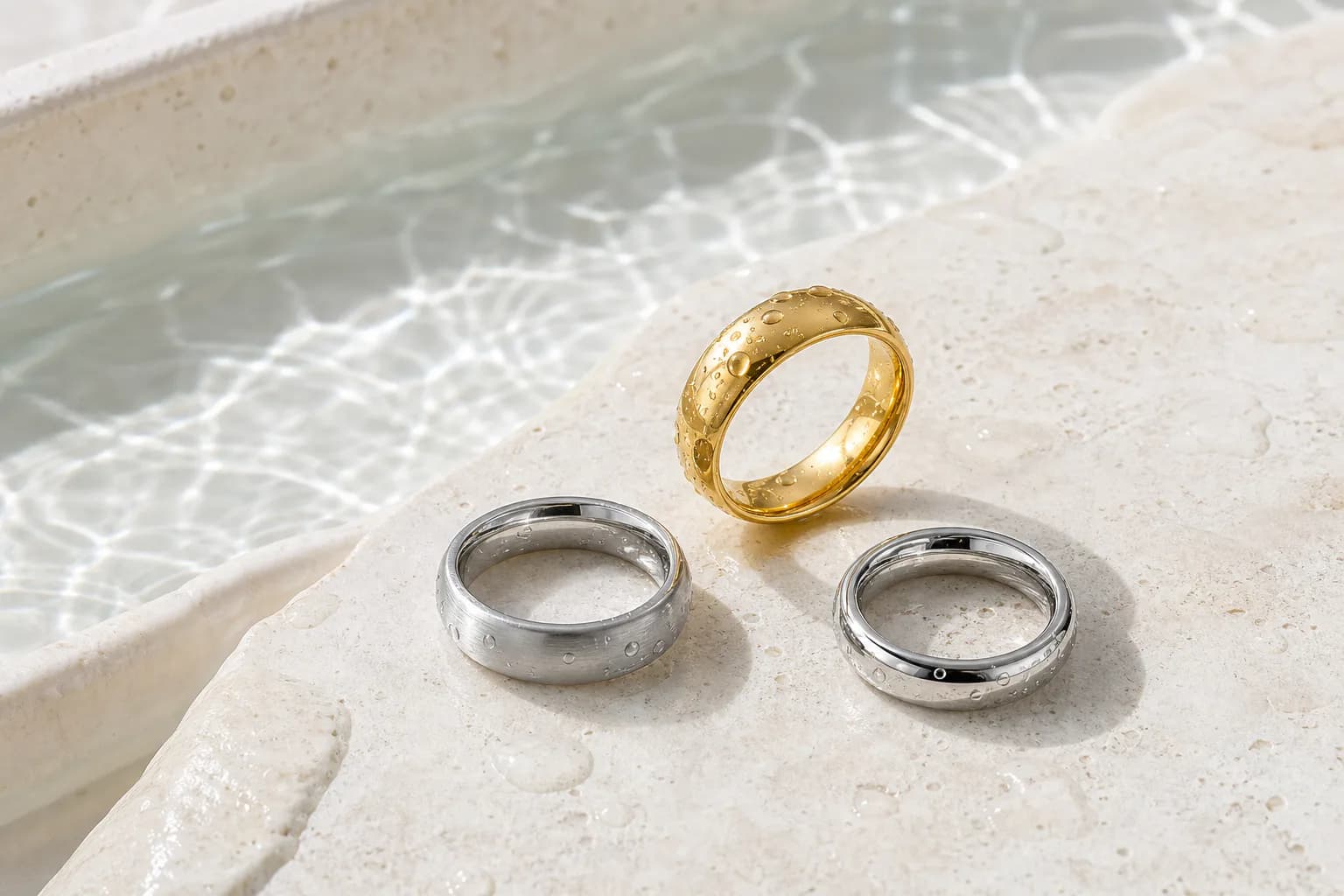
Handwashing and brief contact with clean water are different from repeated exposure to chlorinated pools, salt water, cleaning chemicals, perfume, sunscreen or acidic residues. Crevices around a spinner mechanism can retain moisture and product buildup. Rinsing, drying and occasional gentle cleaning help preserve movement and appearance.
A product described as suitable for everyday water contact should still have a care statement. This is not a contradiction; it tells customers which exposure was considered and which was not. Retailers should avoid equating a base alloy’s corrosion resistance with an unconditional guarantee for the whole assembled, coated product.
Why gold PVD performance varies
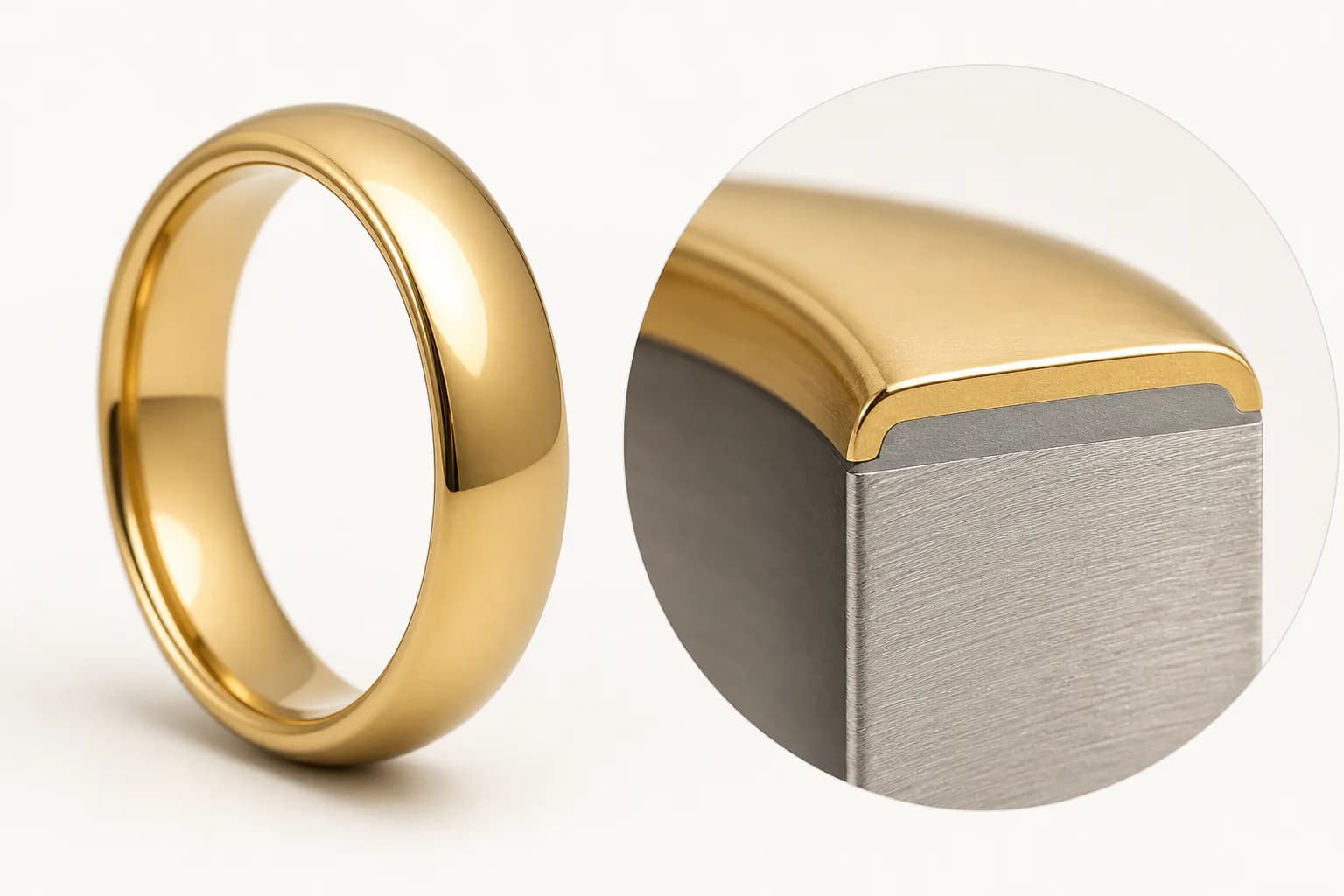
Physical vapor deposition, or PVD, creates a thin deposited layer under controlled conditions. It is often selected for gold-tone stainless steel jewelry because it can be more wear resistant than simple decorative electroplating. Yet “PVD” is a process family, not a single durability grade.
Surface preparation, cleaning, base layer, coating chemistry, thickness, chamber control, geometry and post-process handling all influence the result. Edges and contact zones receive the most abrasion. A credible supplier defines an internal standard and tests production samples rather than relying on the process name alone.
Does stainless steel tarnish?
Stainless steel does not tarnish in the same way as sterling silver, but it can lose brightness through residue, fine scratching or environmental contamination. Under harsh conditions, corrosion or staining is still possible. Gold-tone appearance changes may reflect coating wear rather than corrosion of the steel beneath.
Care guidance should distinguish cleaning from polishing. A soft cloth and mild soapy water are generally less aggressive than abrasive pastes. Harsh chlorine cleaners, bleach and abrasive pads can damage surfaces and should be avoided. Moving rings should be fully dried so residue does not accumulate in the track.
What “hypoallergenic” can and cannot promise
No jewelry material is universally non-reactive. Nickel-sensitive wearers may ask about stainless steel because the alloy contains nickel. What matters is not only total nickel content but how much can be released at the skin surface under relevant conditions. Regional rules and test methods may apply depending on where the product is sold.
A responsible listing identifies the material and avoids medical certainty. Brands selling into regulated markets should obtain advice on applicable chemical restrictions and release testing. Customers with a history of severe reactions should consult a qualified professional and stop wearing any item that causes irritation.
Quality control for wholesale rings
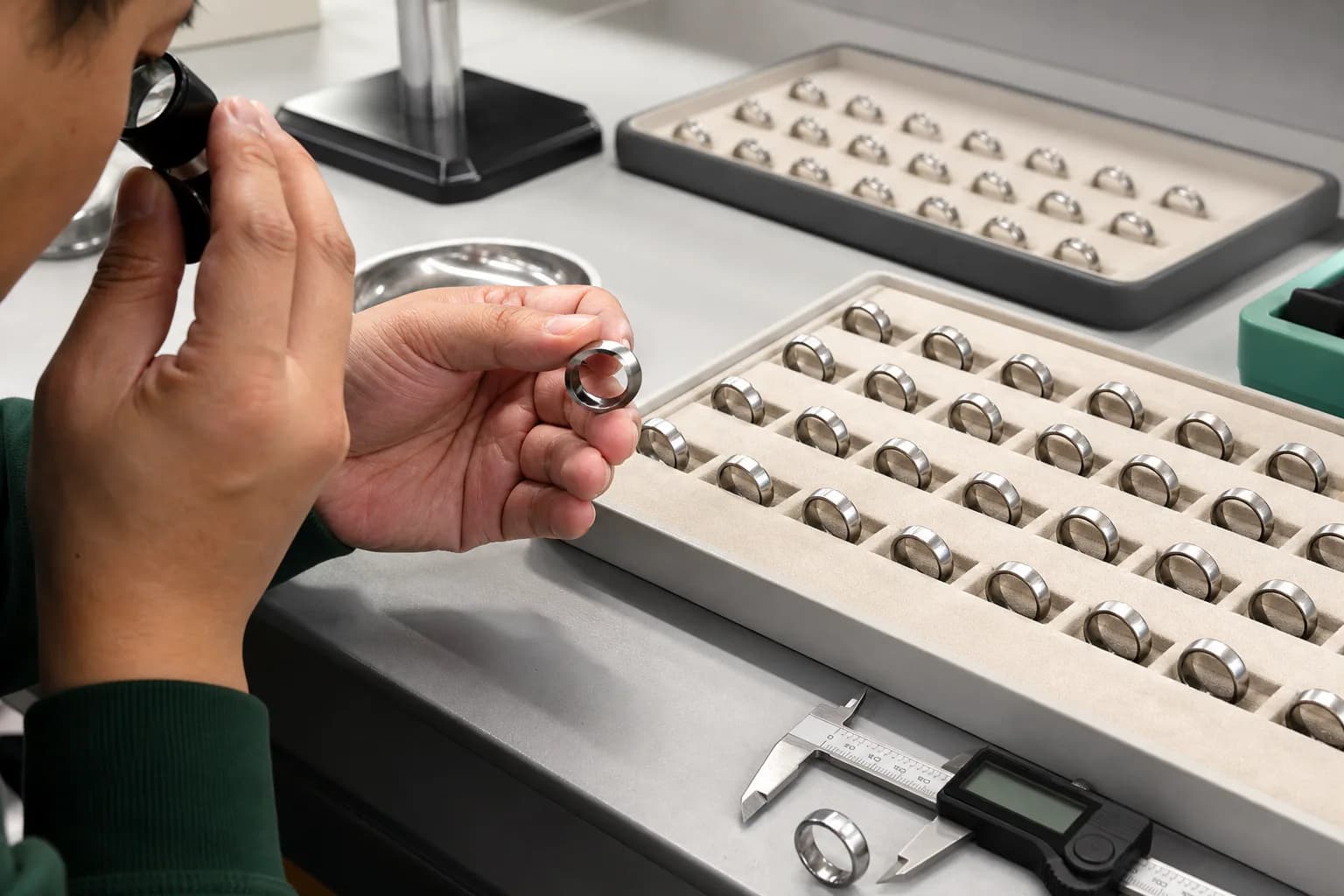
A practical inspection plan combines documents, measurements and visual review. Confirm alloy documentation, size tolerance, width, weight, edge finish, coating color, stone security and spinner function. Compare production against an approved sample under consistent lighting. Record defects with photographs and agreed acceptance criteria.
For coated rings, sample tests may include controlled abrasion, artificial perspiration, adhesion or corrosion exposure chosen for the target market. A test result is meaningful only when the method, duration, acceptance limit and sample are defined. Marketing wording should reflect the evidence actually held by the brand.
- Verify alloy and restricted-substance requirements
- Approve master color and finish samples
- Measure ring size, width and critical gaps
- Inspect edges, stones, enamel and moving parts
- Document care instructions and claim boundaries
Frequently asked questions
Can I shower with a 316L ring? Many uncoated 316L rings tolerate occasional showering, but soaps and residue can affect finish and spinner movement. Coated or stone-set products need product-specific guidance.
Is gold PVD permanent? No surface finish should be described as immune to wear. Good processing and care can improve longevity, while abrasion and chemicals accelerate change.
Is 316L safe for sensitive skin? Many people wear it comfortably, but individual reactions are possible. Material documentation and applicable release testing provide stronger evidence than a generic label.
What should a buyer request from a factory? Ask for material declarations, relevant compliance evidence, coating specification, approved samples, inspection criteria and care recommendations.
Sources and editorial note
This guide combines product-development experience with publicly available references. It is educational content, not medical, legal or compliance advice. Requirements vary by market and product.